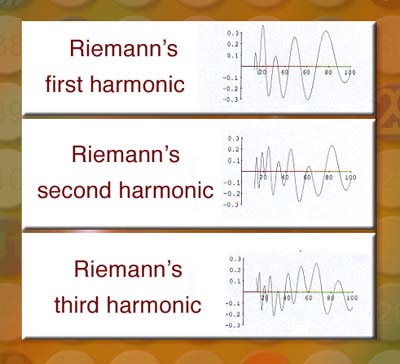
(From a post “the music of the primes” by Marcus du Sautoy.)
A new polymath proposal over Terry Tao’s blog who wrote: “Building on the interest expressed in the comments to this previous post, I am now formally proposing to initiate a “Polymath project” on the topic of obtaining new upper bounds on the de Bruijn-Newman constant 
Briefly showing that 


 The polymath blog
________________________________ From: The polymath blog Sent: Thursday, January 25, 2018 10:17 PM To: ay74ay@hotmail.com Subject: [New post] A new polymath proposal (related to the Riemann Hypothesis) over Tao’s blog
G
Comment by yiuyuxx235 — June 2, 2018 @ 7:31 am |
Riemann Hypothesis Proof
http://www.sga.su/riemann-hypothesis-proof/
Comment by Roman — July 4, 2018 @ 4:12 pm |
https://we.tl/t-Fvdbsk2X32
proof for riemann hypothesis
Comment by امير عبد المالك — March 31, 2019 @ 3:00 pm |
I know the probability of me being wrong is high…but my life has always been risky:https://www.researchgate.net/publication/354801450_Proof_of_the_Riemann_Hypothesis
Luis-Báez approach. I Have used Hölder’s inequality. Don´t judge a book by its cover,
Comment by gui7575 — October 4, 2021 @ 9:33 pm |
Number Theory_Proofs_about strong (binary) Goldbach Conjecture & Riemann Hypothesis, Gaps of primes & quasi primes (semi primes) , perfect numbers etc.
Is Polymath Project interesting in Scientific Publication ?
(Let’s say: Published by Polymath Project, VSD (GR))
(at ArXiv.org, about 26 word pages, without figures, font Times New Roman 12, in greek language. I haven’t translated in english the document yet ).
Thank you in advance.
Proofs at “A new polymath proposal (related to the Riemann Hypothesis) over Tao’s blog”
Proofs at “(Research thread V) Deterministic way to find primes”
Proofs at “Polymath proposal: bounded gaps between primes”
(since 10/10/2024…)
1. The Riemann Hypothesis is TRUE (Proof).
(Mathematical society has already proved it. I simply combined a formula with Riemann harmonics and the Riemann converter. My contribution to the RH problem is no greater than 10%, maybe less.)
2. The strong (binary) Goldbach conjecture is TRUE (Proof)
As re-expressed by Euler, an equivalent form of this conjecture (called the “strong” or “binary” Goldbach conjecture) asserts that “all positive even integers ≥4 can be expressed as the sum of two primes.”
3. The “strongly weak” Levy’s Conjecture is TRUE (Proof)
“all odd numbers ≥7 are the sum of a prime plus twice a prime.” “an odd number can be written as a sum p+2q with p,q primes”
4. de Polignac’s Conjecture or Twin prime conjecture is TRUE (Proof)
Twin prime conjecture: “Every even number is the difference of two consecutive primes in infinitely many ways (Dickson 2005, p. 424). If true, taking the difference 2, this conjecture implies that there are infinitely many twin primes (Ball and Coxeter 1987).”
5. a) There is NOT odd perfect number (Proof)
b) Infinite number of Mersenne quasi primes or Mersenne primes. (Proof)
6. i) Brocard’s Conjecture is TRUE (Proof)
“π(p(n+1)^2) – π(p(n)^2) ≥ 4 , p(n), p(n+1) primes”
ii) Legendre Conjecture is TRUE (Proof)
“for every n there exists a prime p between n^2 and (n+1)^2”
iii) Waring’s Prime Number Conjecture is TRUE (Proof):
“every odd integer is a prime or the sum of three primes.”
7. a) square free Euclid Numbers Conjecture is TRUE (Proof),
En=p#n+1=p1p2p3…pn + 1
b) Infinite number of Fermat quasi primes or primes (Proof)
c) Infinite quasi primes or prime numbers of form N^2+1 (Proof)
d) Infinite number of Sophie Germain primes (Proof)
e) Infinite number of Fibonacci quasi primes or primes (Proof)
f) If GCD(a,d)=1 a,d:coprimes , n≥1 integer => a+nd=p, p prime
g) Upper limit at Bertrand’s Postulate (Proof)
8. Primes – quasi-primes Reciprocals Conjecture:
p: prime or quasi-prime, L: period of 1/p, Reciprocal’s Digital Root=9
m=10^x , x= L-log9-logp , x>0
Conclusion:
I think, we can not distinguish prime numbers & quasi numbers (semiprimes). Thus, integer factoring is a NP-complete problem. Thank God!
Feedback is desirable!
VSD, Chemical Engineer, MBA, MBIT
(Greece – GR)
Comment by Anonymous — November 22, 2024 @ 8:38 am |
Hey Yuri 😘lookhttp://Comet 12P/Pons-Brooks
Comment by Anonymous — February 10, 2025 @ 9:11 am |